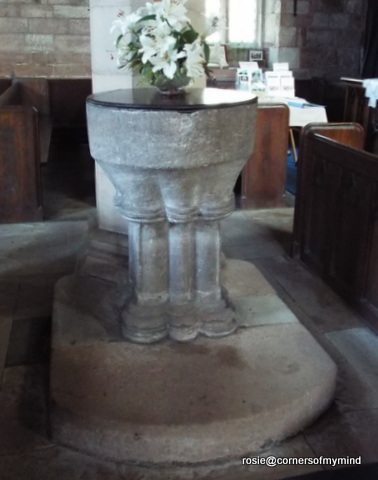
On Thursday we decided to visit the city of Lichfield. It's only about thirty miles away and we hadn't been for a while. The sun was shining and there was an exhibition we wanted to see. What better excuse for a little excursion?

We walked up to the Garrick Theatre for coffee first, passing the birthplace of Dr Samuel Johnson (1709-1784) on the way. This building, which stands at the top of the Market Place, is now a museum and book shop. In the market square there of statues of both Dr Johnson and his friend and biographer James Boswell. I did take photos of both but they weren't so good against such a bright background.

We had a look around a few of the market stalls mostly tasty looking artisan foods, herbs and garden plants and then had a mooch around a few antique shops.

Then we wandered up to the Cathedral

The three spires can be seen from quite a distance.

A view of the front of the Cathedral from the Cathedral Close.

Inside it was quiet and peaceful.
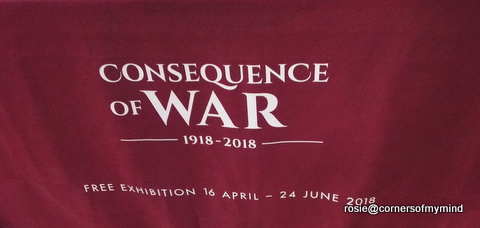
This was the exhibition we wanted to see. It is an exhibition which, according to the 'blurb', explores the themes of war and peace through art and history.
It is a very interesting and moving exhibition which reflects on the consequences and effects of WWI on both a national and local level. It covers the immediate aftermath of the conflict and the subsequent but not always achieved quest for peace over the hundred years from 1918 until this year as we mark the ending of the war.

In the Chapter House are works by well known post war artists, including Henry Moore, Paul Nash, Graham Sutherland, Jacob Epstein and Henri Gaudier-Brzeska as well as new pieces by Peter Walker the Cathedral's artist in residence.

I didn't take any photos in the art exhibition as I wasn't sure of copyright and also it seemed intrusive at this point of the exhibition.

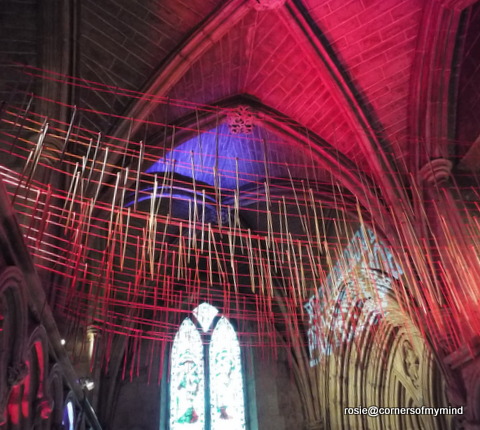
The exhibit above is by Peter Walker and is called Yarn Front. The suspended red wool and knitting needles represents the consequences of war on domestic life.
 Another section of the exhibition was the 1918 sitting room where people were invited to sit and write a letter real or imaginary to a loved one at the front or in a war zone or to knit a square with which to 'make do and mend'.

By the time we'd finished reading the information panels and looked at the whole of the exhibition there were quite a few more people visiting the Cathedral so most of the photos I took are of the upper regions of the building.

A view of the east window

A view of the nave

A view of the Cathedral from a window of Erasmus Darwin's house looking out of an upstairs window at the back across the herb garden. I'll write more on this in a later post.
Here are more details about the exhibition which continues until 24th June 2018